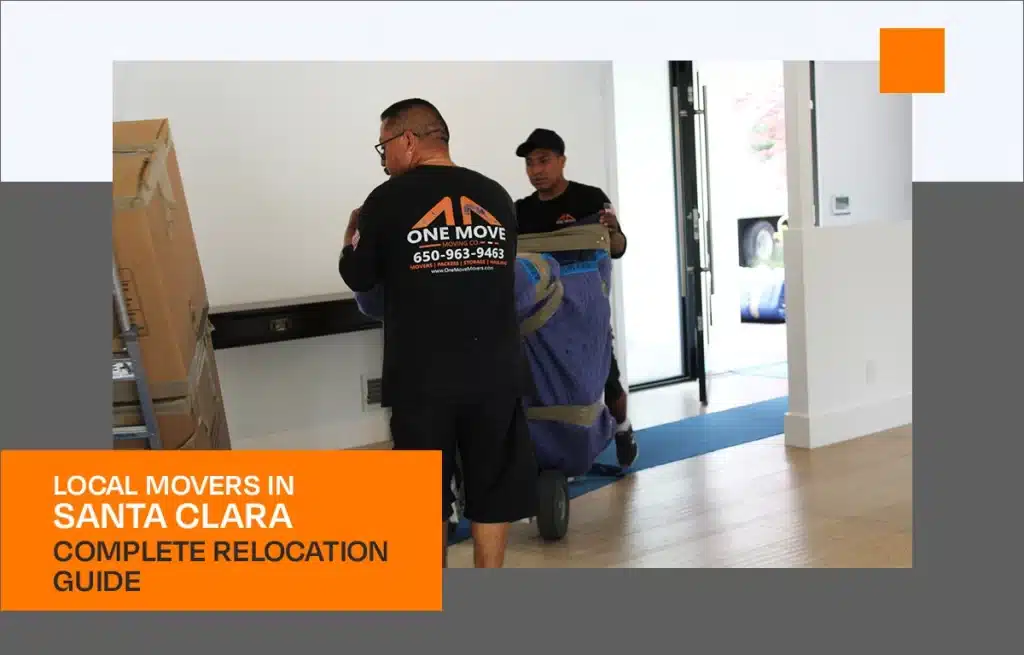

Santa Clara Moving Guide: Best Time to Move, Costs, Permits & Local Insights
Moving to Santa Clara or anywhere in the Bay Area can be exciting, but the traffic, strict building rules, parking challenges, event days, and unpredictable move-in schedules can quickly feel overwhelming.
The good news is that with the right information and a little planning, your move can be smooth and stress free.
That is exactly why we created this Santa Clara Moving Guide.
One Move Movers: As longtime Bay Area moving professionals, we’ve seen the patterns, the hiccups, and the common mistakes people make when moving to Santa Clara. This guide is designed to give you solutions before the challenges even arise.
We created this blog to address real questions from the Bay Area community, including local moving regulations, cost expectations, permit requirements, and expert insights based on handling hundreds of Santa Clara moves.
Santa Clara brings together suburban neighborhoods, university housing, and active commercial and tech areas.
Some moves are smooth and straightforward in newer buildings with elevators, while others are more complex in older Victorian homes. Traffic, tech-company rush hours, and major events can also influence your moving time.
Locals people often describe Santa Clara as convenient but pricey; many newcomers on local forums emphasize budgeting carefully for rent and living costs. (Source: Reddit Santa Clara)
Also People who live in Santa Clara say it’s a nice and easy place to live, but it’s expensive.
In reedit people often talk about the importance of planning your budget before moving.
Quick planning checklist:
- Confirm whether your street or building requires a temporary parking permit.
- Reserve elevator time and loading dock access with building management at least 2–3 weeks in advance.
- Schedule your move early in the morning to avoid traffic and event-related delays.
- Measure larger furniture pieces and entryways, especially if you are moving into historic neighborhoods.
- Organize donation drop-offs and pack a simple “first-night” essentials box.
Best times to move:
| Season | What to expect | Pro tips |
| Winter (Nov–Feb) | Lower demand, easier booking | Often more affordable but be sure to check for weather conditions and holiday closures. |
| Spring (Mar–May) | Increasing demand | Good availability if you book 4–6 weeks out |
| Summer (Jun–Aug) | Peak season | Highest prices, so aim for mid-month if you can |
| Fall (Sep–Oct) | Moderate demand | Offers a good balance, just avoid peak university move days. |
Our Mover tip: mid-month moves are often less expensive than end-of-month turnover days. Movers and residents consistently report this.
How much will it cost?
Moving costs depend on factors like crew size, timing, accessibility, and additional services such as packing, disassembly, long carries, and stairs. Local pricing guides and recent market data provide a useful reference:
- A local studio or one-bedroom apartment typically ranges from $400 to $850.
- Two- to three-bedroom houses usually cost between $900 and $1,600, depending on stairs and driveway access.
- High-rise apartments near Levi’s Stadium with long carries or elevator scheduling can run $1,200 to $2,000 or more.
- Special event days or challenging access can increase costs further.
Permits, Parking, and Building Access: What to Check
Some moves require permits or reservations. Always confirm details with the city of Santa Clara and your building management.
- Residential Truck Parking Permit: Santa Clara has a Residential Permit Parking program. If your street is in a permit area, you’ll need to register and obtain the required permits. Allow at least a week for processing in many locations.
- Elevator Reservations and Loading Docks: High-rises and many modern apartments often require elevator reservations and sometimes proof of insurance for vendors. Book these early, especially near universities or in newly developed areas.
- Oversized Vehicle Restrictions: Nearby cities may have rules for narrow streets or large vehicles. If your moving truck is oversized, check local ordinances for restricted streets.

Permit summary table:
| Permit & Item | Likely needed? | Where to confirm |
| Residential parking permit | Sometimes (RPP areas) | Santa Clara City permit portal |
| Loading zone and curb reservation | Often for high-traffic streets | Building Management or City Traffic Department |
| Truck access (oversized) | Depends on street width | Local city ordinances; check neighboring cities if moving near city borders |
Neighborhood-Specific Notes (based on resident feedback):
- Old Quad (historic Victorians): Narrow doorways and staircases, measure furniture carefully and plan for partial disassembly. Many residents note the need for custom moving solutions
- Mission College, University-adjacent apartments: Elevator booking windows and tight move-in schedules, residents report strict building rules during academic move-in/out.
- Rivermark Village & Santa Clara Gardens: Family-friendly neighborhoods with generally better street parking. Some HOAs have rules regarding truck placement.
Real User Questions from Social Mentions:
1. Will I need a parking permit for moving day?
If your street is in a Residential Permit Parking zone or your building requires reserved truck space, you’ll need to arrange a permit or booking. Check Santa Clara’s permit portal and confirm with your property manager.
2. How do I avoid surprise fees?
Request a detailed written estimate from your movers that includes extras such as stairs, long carries, shuttle fees, and elevator wait times. Prepare an inventory and disclose specialty items like pianos, safes, or large TVs.
3. Is it better to move mid-month?
Yes, mid-month typically sees less demand than end-of-month lease turnovers. Movers and residents often find it easier to secure time slots, and rates can sometimes be lower.
4. How soon should I book movers?
During peak season (May to September), it’s best to book 4 to 6 weeks in advance.
At off-peak times, 2 to 3 weeks may be sufficient, but permits, elevator reservations, and building restrictions still require advance planning.
Packing & move-day checklist:
Two weeks out:
- Confirm parking permit & elevator reservation.
- Notify your building management.
- Measure oversized items to plan for disassembly or special handling.
One week out:
- Confirm the mover’s arrival time
- Label boxes by room.
- Pack an essentials box with documents, chargers, keys.
Day before:
- Clear pathways for a smooth move.
- Disconnect appliances for safety.
- Have water and snacks ready for movers.
Move day:
- Be available for quick decisions.
- Check inventory as items are loaded.
- Confirm placement of items in your new home.
Our mover’s tip:
Label each box with the destination room and the three main items inside.
For example, Kitchen pans, cutlery, and small appliances. This helps speed up unloading and keeps everything more organized.
Storage & short-term solutions
If your new home needs cleaning or repairs, it’s best to take care of that before moving in. Santa Clara offers many climate-controlled storage options, and if you need a reliable solution, you can use One Move Movers’ storage facilities for convenient, affordable, and seamless transportation.
Local contacts:
Santa Clara City Permits: Check the RPP and permit portal for parking and related rules.
Client Testimonials


Final checklist before you call a mover:
- Prepare a rough inventory, either as a list or with photos.
- Verify necessary permits and reserve elevator time, if applicable.
- Confirm in writing that the mover’s estimate covers all fees.
- Check the local event calendar for stadium or convention dates that may affect parking or traffic.
- Pack a “first-night essentials” box for easy access.
Ready to move with confidence?
Contact One Move Movers today for a free, personalized quote:
- Call us: 650-963-9463
- Email: customerservice@onemovemovers.com
- Visit: 961 E Charleston Road Palo Alto, CA 94303
- Online Quote: Free Moving Quote