
How to Move Furniture Safely in the Bay Area: Expert Tips, Costs & Local Challenges
Moving valuable furniture in the Bay Area can be more complex than it seems. It requires careful planning and professional handling to prevent damage, even minor scratches. From steep San Francisco streets and Silicon Valley high-rises to spacious East Bay homes, each area comes with its own unique challenges and often requires proper documentation and coordination.
For over 25 years, we’ve helped thousands of families move their furniture safely across the Bay Area. In this guide, we share our real-world experience to help you prepare properly, protect your belongings, and avoid common and costly mistakes.
What Bay Area residents are asking online about furniture moving
While preparing this guide, our team reviewed local forums and social media discussions to better understand the real concerns of Bay Area residents. These were the most common questions we found:
- Do I need to purchase an expensive parking or moving permit in San Francisco?
- How far in advance should I reserve elevators or loading docks?
- Is it better to hire a tasker for one heavy item, or a professional mover?
- What are my options if staircases or narrow hallways won’t fit my furniture?
Below, you’ll find clear and practical answers to each of these questions.
Why safe furniture moving matters in the Bay Area?
The Bay Area is home to a wide range of properties from Victorians and hillside homes to modern townhouses and high-rise apartments all located in environments that vary from steep streets and narrow alleys to busy downtown cores and quiet suburbs.
Because of this diversity, no two moves are alike. Every home presents its own set of challenges, making safe furniture moving about much more than simply lifting heavy items. It requires:
- A clear strategy to plan the safest route through tight or awkward spaces
- Thorough preparation, including measuring doorways, staircases, elevators, and parking areas
- Local expertise to navigate Bay Area roads, parking regulations, building policies, and changing weather conditions
For example:
- A sofa that fits easily in a San Jose townhouse may not pass through a narrow San Francisco Victorian staircase.
- A wooden table can expand when moved from foggy Richmond to warmer Fremont.
- Elevator access in Palo Alto apartments often requires strict pre-booked time slots.
These small but critical details often determine whether your furniture arrives in perfect condition or suffers avoidable damage.

Understanding the complexities of moving in the Bay Area
Different types of homes demand different moving strategies. Here are a few real-life examples from our recent moves:
- San Francisco Victorian with a narrow staircase: We relocated a 3-seater sofa in a Nob Hill Victorian where the staircase turn was extremely tight. To make it work, we removed the legs, shrink-wrapped the frame, and used sliding pads to protect the walls from scratches.
- San Jose high-rise apartment: In downtown San Jose, elevator access often requires advance reservations. One move had to be completed within a strict 2-hour loading window, leaving no room for delays.
- Oakland Hills home with a steep driveway: A heavy hardwood dresser needed to be carefully transported down a steep incline using a powered dolly to ensure control and stability.
These situations highlight why every Bay Area move requires a tailored approach, careful planning, and experienced handling.
Urban moving challenges:
Moving in the Bay Area often involves unique logistical hurdles, including:
- Limited parking or the need for special permits
- Strict move-in and move-out regulations in many buildings
- Narrow streets and heavy traffic that can cause delays
- Long carry distances and multiple staircases that increase the risk of damage
Being aware of these challenges in advance allows for better planning and helps prevent last-minute complications.
Collective furniture moving considerations:
For safe residential furniture moves:
- Full-service packing and unpacking for delicate or high-value items
- Disassembly and reassembly of large pieces to navigate stairs and hallways
- Custom crating for antiques or specialty furniture
- Climate-controlled trucks to protect sensitive materials
For safe commercial furniture moves:
- Proper labeling and sequencing for office furniture
- Anti-static and secure packing for technology equipment
- Required insurance certificates and building approvals
- After-hours scheduling when buildings restrict daytime access
Furniture protection techniques – our real process:
We rely on advanced packing materials such as:
- High-density moving blankets for full surface protection
- Foam and bubble wrap layers for glass, marble, and fragile edges
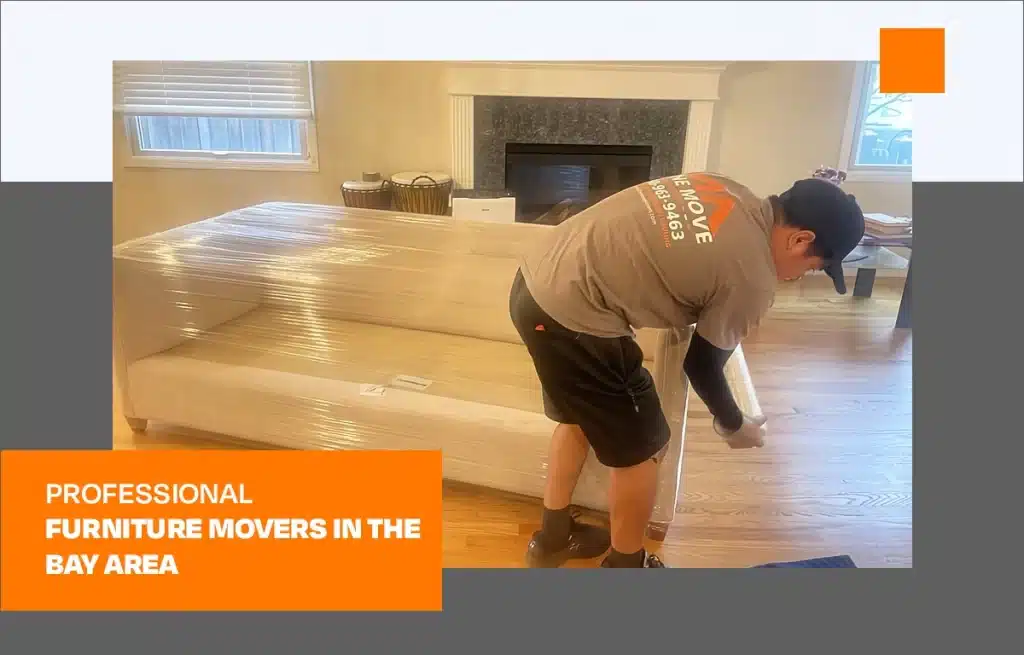
- Shrink-wrap for fabric and leather items
- Edge protectors for tables, frames, and dressers
Specialized moving equipment:
- Hydraulic lift gates for heavy or oversized items
- Air-ride suspension trucks to minimize vibration on longer routes
- Tie-down straps and built-in truck anchors to prevent shifting on hills and curves
- Shoulder dollies and stair-friendly equipment for tight or narrow spaces

Professional handling practices:
Our movers are trained in:
- Proper lifting techniques and back-safety procedures
- Protecting doorframes, corners, flooring, and stair rails
- Efficient loading with balanced weight distribution
- Minimizing the risk of damage from start to finish
Step-by-step guide: how to move furniture safely in the Bay Area:
- Measure all access points including hallways, doorways, staircases, and elevators.
- Disassemble large items by removing legs, shelves, cushions, and any glass components.
- Wrap thoroughly using moving blankets and shrink wrap to protect fabric and wood surfaces.
- Plan the travel path and avoid sharp corners or unstable staircases.
- Load strategically with heavy items placed first and fragile pieces kept upright.
- Tie down all items securely since Bay Area hills and curves can cause shifting inside the truck.
- Allow for climate adjustment by letting wood furniture acclimate for four to six hours before unwrapping.
Common mistakes people make when moving furniture in the Bay Area:
Avoid these to prevent damage:
- Not measuring staircases or elevators in advance
- Booking a move without checking building permits or rules
- Using low-quality packing materials from big-box stores
- Scheduling a move without confirming elevator access or truck clearance
- Transporting wood or leather furniture without proper climate protection
- Assuming you can double park or block the curb without permission
Do not assume enforcement is light. Some people double park and get away with it, but enforcement varies, and in commercial zones or busy neighborhoods, tickets or towing can happen quickly.
Cost considerations for Bay Area furniture moving:
Costs vary based on distance, weight, staircases, elevator access, truck parking, and protection requirements.
Typical bay area cost ranges:
- Local moves: $500 to $1,500
- Long-distance moves: $2,500 to $9,000
- Specialty or fragile items: an additional $200 to $500
Real example pricing:
- One-bedroom from San Francisco to Daly City: approximately $650 to $900
- Two-bedroom from San Jose to Sunnyvale: approximately $1,100 to $1,500
- Crating for a heavy glass table: approximately $180 to $250
These examples help set realistic expectations for planning.
Bay area microclimate tips:
- Fog and coastal moisture in San Francisco can cause wood to swell
- Heat in the East Bay may dry out or crack leather and veneers
- Temperature fluctuations on the Peninsula can affect glass, marble, and laminated furniture
- Keep wooden furniture wrapped until temperatures have stabilize
Preparing for your furniture move: checklist
- Measure all furniture along with doorways, staircases, and hallways
- Remove fragile items, cushions, and accessories
- Take photos of valuables and irregularly shaped items
- Notify building management about parking, elevator access, and any required permits
Sustainability in furniture moving:
- Use reusable moving blankets
- Minimize the use of plastic bag whenever possible
- Donate old furniture to organizations such as Salvation Army or Goodwill
- Use recycled cardboard for packing
Queries we hear from bay area clients:
Q. Do I need to buy a San Francisco moving permit? It seems expensive.
If you need dedicated curb space for several hours in a busy area, you will need a temporary parking and moving permit. Costs vary depending on the location, with residents often paying hundreds of dollars in prime areas. Double-parking may seem cheaper, but tickets or towing can end up costing more. Always check your city’s permit website or call 311 to confirm the rules for your street.
Q. My building requires 14 days’ notice and an elevator deposit. What should I do?
Many HOAs and buildings require advance elevator reservations and may charge a supervision fee. Reach out to building management as soon as your move-out and move-in dates are tentative. If you miss the preferred window, ask about alternate times, such as weekday mornings, or any applicable higher move-in fees.
Q. Will movers charge extra for stairs or long carries?
Yes, many movers include additional fees for flights of stairs, long carry distances, and tight or narrow access. One Move Movers does not charge extra for stairs or long carries, but these factors can increase the total time needed for the move. Providing accurate measurements and photos when requesting an estimate helps avoid unexpected charges.
Q. Should I risk double-parking or buy the permit?
Purchasing the permit is the safer choice in busy areas. Double-parking may work on quieter streets, but enforcement is unpredictable. If you are unsure, it is better to get the permit.
Q. How do I protect wood furniture from San Francisco fog or East Bay heat?
Wrap wood items with breathable moving blankets and shrink wrap. During transport, avoid direct sunlight, fog exposure, and leaving items unwrapped. After arrival, allow four to six hours indoors before unwrapping so the furniture can adjust to the indoor climate.
Q. What is the best time to move?
Morning moves help avoid traffic and higher temperatures.
Q. Can all couches fit through Victorian staircases?
No, many require partial or full disassembly to fit.
Q. Will movers handle antique or fragile furniture?
Yes, though these items typically require custom crating or additional protective measures.
Q. Move furniture safely in the Bay Area:
Moving furniture safely in the Bay Area takes preparation, an understanding of local challenges, and the right protection techniques. With careful planning and the expert tips provided in this guide, you can move your furniture confidently, prevent damage, and minimize stress.
This guide is based on our hands-on moving experience throughout San Francisco, the Peninsula, Silicon Valley, and the East Bay. We hope it helps you plan a smoother and safer move.
📞 Ready to move with confidence?
Contact One Move Movers today for a free, personalized quote:
- Call: 650-963-9463
- Email: customerservice@onemovemovers.com
- Visit: 961 E Charleston Road, Palo Alto, CA 94303
- Online Quote: Free Moving Quote